

The 7 AM Rush: A Survival Guide to the School Morning (It Starts the Night Before)
A calmer school morning starts the night before: how much sleep children need, a five-step morning routine, quick breakfasts and a night-before checklist.
It is 6:52. One sock has gone missing, the tiffin is half-packed, the hair is half-plaited, and somebody has just remembered that today is the art class and the A3 sheet is "somewhere". The van horn goes at 7:05. Every parent in India knows this exact quarter of an hour, and almost nobody talks about how much it takes out of us before the day has even started.
The short answer A calm school morning is mostly made the night before. Children aged 6 to 12 need 9 to 12 hours of sleep, so bedtime decides the morning. Pack the bag, lay out the uniform, fill the bottle and sign the diary at night, then keep the morning to a short, repeatable list.
Why are school mornings so chaotic?
Because we are trying to do four jobs at once in the shortest, sleepiest window of the day. Cooking, dressing, packing and checking homework all land between waking up and the school bus. Add a child who is still half asleep and a parent who slept late answering office mail, and small things (a lost sock, a missing name slip on a new notebook) become big fights.
The fix is not waking up earlier. It is moving the decisions out of the morning.
How much sleep does my child need for school?
This is the part that quietly decides everything. The American Academy of Sleep Medicine's consensus statement on children's sleep says children aged 3 to 5 should sleep 10 to 13 hours in 24 hours (naps included), children aged 6 to 12 should sleep 9 to 12 hours, and teenagers 8 to 10 hours. It links regular short sleep with attention, behaviour and learning problems.
Now do the maths for your own house. If a Class 3 child must be up at 6 AM for a 7 AM van, even the low end of 9 hours means lights out by 9 PM. For many Indian families, with late dinners and tuition, that is the real battle, and it is fought at night, not at 6:52.
The American Academy of Pediatrics' page on healthy sleep habits adds three practical points: keep the same waking time on weekdays and weekends, expose children to bright light when it is time to get up, and turn off all screens at least an hour before bedtime.
The morning is not won at 6:52. It is won the night before, at the shoe rack.
What is a good school morning routine for kids?
A good routine is boring on purpose. The same steps, in the same order, every school day, so nobody has to think. For most families it looks something like this:
- Wake up and open the curtains. Light helps the body wake up.
- Toilet, brush, wash. Younger children do better with a picture chart on the bathroom door.
- Uniform on. It is already laid out, so there is nothing to search for.
- Breakfast sitting down. Even ten minutes counts.
- Shoes, bag, bottle, out. Everything waits by the door.
Let your child own one or two steps. A six-year-old can carry their own bottle to the bag. A ten-year-old can pack the whole school kit against the timetable. It saves you a few minutes, and it means they notice when something is missing.
The night-before station that saves your morning
Pick one spot near the front door and make it the launch pad. The bag is packed against tomorrow's timetable, the uniform is folded on top, the shoes are polished, and the empty bottle and tiffin box sit ready to fill. Clip a small checklist to the bag so your child can tick it off without asking you.

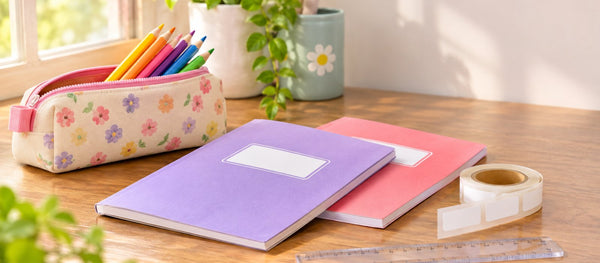
This is also the moment to sort the small things that cause morning panic: a signed diary, a permission slip, a new notebook that still needs a book name slip. If it needs a pen, it belongs to the night before.

What should my child eat before school if we're short on time?
Something, sitting down, with a little protein. The AAP's back-to-school tips say children who eat a nutritious breakfast function better, with better concentration and more energy, and suggest a breakfast that contains some protein. Think of things you can prepare ahead: soaked poha, idli batter, boiled eggs, paneer or besan chilla mix, a banana with peanut butter toast.
The same AAP page suggests moving to earlier bedtimes a week or two before a new school term, and having children turn off electronic devices well before bed. Both help the morning more than any alarm clock.
Almost missed this Fill the water bottle the night before and keep it in the fridge door, cap on. It is the easiest thing to forget on the kitchen counter, and if it does get left at school, a name on it gives it a way home.
How we can help
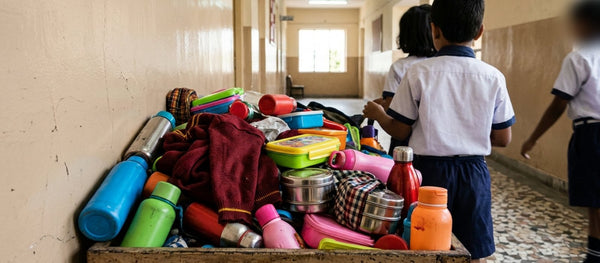
Mornings are hard enough without hunting for whose bottle is whose. If your child is starting a new term, our back to school combos put bag tags, clothes labels and book labels in one box, and our name labels cover bottles and tiffins. For the rest of the list, our back to school checklist and these tips to stop your child losing things at school are a good next read. Be gentle with yourself on the mornings that still go wrong. Everyone has them.


Frequently asked questions
What time should my child go to bed on a school night?
Count back from the wake-up time. Children aged 6 to 12 need 9 to 12 hours of sleep, so a 6 AM wake-up means lights out by 9 PM at the latest.
How can I make school mornings less stressful?
Move every decision to the night before: bag packed, uniform out, bottle filled, diary signed. Then keep the morning to the same five steps every day.
Should children use screens in the morning before school?
It is easier to keep screens out of the morning entirely. The AAP also advises switching off all screens at least an hour before bedtime, which protects the next morning too.
At what age can a child pack their own school bag?
There is no fixed age. Start small with a picture checklist while you check, then hand over more of the job each term until they pack against the timetable on their own.

Join the conversation