

Say Hello to Aunty: How to Build Confidence in a Shy Child Without Forcing It
Diwali visits are coming, and so is "beta, say hello to aunty". What helps a shy child, what backfires, and the exact words to use with the child and the relative.
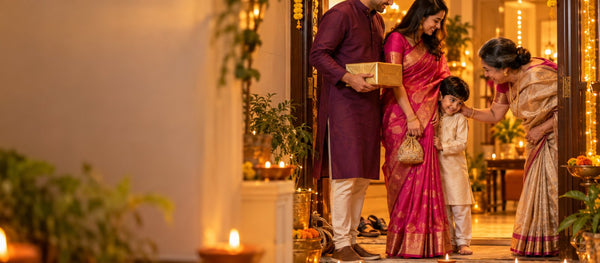
The doorbell rings and six relatives walk in with a box of kaju katli. "Beta, say hello to Aunty!" Your child is suddenly glued to the back of your leg, and you find yourself wondering how to build confidence in a shy child before the next doorbell.
Aunty laughs. "So shy! Didn't Mummy teach you?" Your face goes warm, and a part of you wants to push your child forward, just to end the moment.
Please do not. This festive season brings a lot of doorbells, and there is a gentler way through every one of them. Here is what to do before, during and after a visit, with the exact words to use with your child and with Aunty.
The short answer Do not force the hello. Prepare your child before the visit, give them easy ways to greet (a wave, a namaste, a high five), let them warm up for ten minutes, and speak up for them kindly when a relative pushes. Then praise the small brave things, out loud and specifically. Confidence grows from many small, safe wins, not one forced performance at the door.
Is it normal for a child to be shy with relatives?
Yes. The Raising Children Network, an Australian Government supported parenting site, puts it plainly: "There's nothing wrong with shyness." It is part of a child's temperament, the way they respond to the world.
The same guide suggests a better description. Many children are not shy so much as slow to warm up. Give them time with a new person or a crowded room, and they come round.
Calling a child "the shy one" in front of them can make them feel something is wrong with them. Or that there is nothing they can do about it.

Indian parents ask about this a lot. A recent thread in r/India_Parenting asked how to help a shy 5 to 8 year old become more social (thread). Festive season, with its back-to-back visits, is when the question gets loudest.
Why forcing the hello backfires
We grew up with it. Touch feet, say namaste, answer every question, sing a rhyme for Mama ji. Many of us turned out fine, so why not do the same?
Because forcing a greeting teaches the wrong lesson. A child pushed to perform in front of a crowd learns that greetings are scary, and that their discomfort does not count.
The next visit then starts with more clinging, not less. And "say hello or no ladoo" turns a greeting into a bargain.
Greeting elders is a value worth passing on. The question is not whether. It is how, and when.
None of this means manners do not matter. It means the manners stick better when the child is not scared while learning them.
How to build confidence in a shy child before a visit
Most of the work happens before the doorbell rings. A little preparation at home saves a lot of hiding behind the curtain later.
Tell them who is coming
"Neha Aunty and her two boys are coming at 5. You met them at Dadi's last year." Show a photo from the family WhatsApp group if you have one. A known face is far less scary than a surprise.
Give them a menu of greetings
Namaste, a wave, a high five, a smile, a "hi" from behind your leg. Any of them counts. Children are far braver when they get to choose.

Coach the moment
The Raising Children Network suggests telling a child what to expect. For example, that a grandparent will want to talk to them but "won't mind if you just nod or smile instead of talking". It works just as well for Aunty.
Give them a job
Handing out sweets, showing guests the rangoli, carrying the diya tray. A task gives shy hands something to do, and it quietly turns the child into a host.

Plan a warm-up activity
Pick something two children can do together, quietly, without needing to talk much. A favourite book, a colouring sheet, a card game or an I-Spy game (₹279, for ages 3 to 6). It is easier to make friends with a cousin over a game than over "so, which class are you in?"
Tip: agree on a secret signal before guests arrive, like two squeezes of your hand. It means "I need a minute", and it lets your child step back without a scene.
At the door: what to say for your child
When a relative pushes, you can protect your child and still stay polite. A few lines that work:
- "She takes a little while to warm up. She'll come and say hi once she's settled."
- "He's going to wave today. Wave back, Mausi!"
- "We're practising namaste. Give her ten minutes."

That last line matters. The Raising Children Network notes that gently correcting the "shy" label in front of your child tells them you understand how they feel, and that they can join in when they are ready.
If Aunty still says "So shy! In our time children were not like this," smile and move on. You are not raising your child for her approval. A cup of chai usually ends the discussion.
During the visit: small steps, not a performance
- Let them stay close at first. Sit with them, then move a little further away as they relax.
- Do not over-comfort. Lots of fuss tells a child the situation really is scary. Calm and matter-of-fact works better.
- Start small. One cousin is easier than a room of twelve. Let them play with one child before you introduce them to the rest.
- Never compare. "Look how nicely your cousin greeted everyone" stings, and it sticks.
Visiting several homes in one day? Our Diwali relatives visits checklist covers the visit bag, the sugar high, bedtime and the exit plan, all of which make the round easier on a shy child.
After the visit: praise the brave bits
On the way home, be specific. "You waved at Neha Aunty all by yourself. Did you see her smile?"
Specific praise tells your child exactly which brave thing to repeat. It also gives them a story about themselves that is not "the shy one".
Some children like a little record of their wins: a sticker on a chart, a line in a notebook, a brave-moments jar. Keep it light. The goal is to notice effort, not to pay for greetings.
If you like the chart idea, our personalised rewards stickers (₹399) print your child's name under lines like "Great work" and "Superstar". Prices checked on our store on 13 October 2026.
When shyness might need more help
Most shyness is just temperament. But the Raising Children Network suggests talking to a paediatrician or psychologist if your child's shyness causes them a lot of distress or gets in the way of daily life. For example, if:
- your family cannot go places because of it
- your child shows signs of anxiety at parties or school
- your child says they feel lonely but does not know how to join in
- your child cannot answer or ask questions in class.
Speech, hearing and other developmental reasons can also look like shyness. Your child's doctor or teacher is a good first conversation.
Books, games and comfort things help too
Picture books let children see their own feelings in someone else's story. Our review of When I Feel Shy is a good place to start.
If your child wants to carry a favourite toy into a crowded house, let them. We wrote about why children get so attached to certain things, and why that is usually a good sign.
A quiet game is the other bridge. Two children bent over the same I-Spy board do not need to make small talk. Swipe to see the boards.


-
 30% off
ISPY Game - At the Mall | Fun and Screen-Free Adventure for Kids
Rs. 279
Rs. 399View → -
 30% off
ISPY Game - At the Restaurant | Fun and Screen-Free Adventure for Kids
Rs. 279
Rs. 399View → -
 30% off
ISPY Game - Road Travel | Fun and Screen-Free Adventure for Kids
Rs. 279
Rs. 399View → -
 27% off
Personalised Rewards Stickers
Rs. 399
Rs. 549View and personalise →
 30% off
 30% off
 30% off
 27% off
And if your child has questions about why the house is full of guests in the first place, our guide on how to explain Diwali to kids helps. A child who knows the story behind the visits often feels more part of them.
Were you forced to greet every aunty as a kid? Do you do the same with your children, or have you changed the rule? Tell us in the comments, and forward this to the family group before Diwali. Gently.
Your child does not need to perform at the door. They need to know you are on their side when the door opens.
Frequently asked questions
How do I build confidence in a shy child?
Prepare them before social situations, offer easy ways to join in, let them warm up at their own pace, start with one or two people, and praise specific brave moments. Avoid forcing, comparing or labelling them "shy".
Should I force my child to greet relatives?
No. Teach greetings, but let your child choose how: a namaste, a wave or a smile. Forcing a greeting in front of a crowd often makes the next visit harder.
What do I say when a relative calls my child shy?
Try "She takes a little while to warm up. She'll come and say hi once she's settled." It is polite, and it tells your child you are on their side.
Is shyness a problem in children?
Usually not. Shyness is part of temperament. Talk to a doctor if it causes a lot of distress or stops your child from doing everyday things.
At what age do children grow out of shyness?
There is no fixed age. Some children stay quieter by nature, and that is fine. With practice and support, most become comfortable in social situations.


Join the conversation