

Iron On vs Stick On Name Labels: Which Lasts in Indian Conditions?
Iron-on or stick-on? What each label type survives in monsoon, dishwasher and heavy-wash conditions, and which to use on uniforms, tiffins and bags.
The most common complaint about school name labels is not that they were lost. It is that they fell off.
A label that peels after the second wash, a sticker that dissolves the first time the tiffin goes in the dishwasher, an iron-on patch lifting at the edges after a week: none of these solve the problem. They just delay it and waste money.
So in the iron on vs stick on name labels debate, the real question is not which type is better. Each works well in specific situations, and Indian school conditions (monsoon humidity, daily dishwasher cycles, rough machine washing, heavy bags) make picking the right one for each item matter more than you would think.
The short answer You need both. Iron-on labels for anything made of fabric (uniforms, PE kit, socks, shoes), waterproof stick-on labels for anything hard (bottles, tiffins, pencil boxes, stationery), and a personalised bag tag for school and sports bags.
If you are here for iron on name labels specifically, the quick version: they are the only label that stays on cotton uniforms through months of washing, they take about 30 seconds per garment with a household iron and butter paper, and they do not work on nylon, silk or bags. The sections below cover how to apply them, which fabrics take them and how long they last.
What are iron-on name labels?
Iron-on labels are fabric labels with a heat-activated adhesive backing. Place the label on the garment, cover it with butter paper (or a thin cotton cloth), and press firmly with a household iron for about 30 seconds. The adhesive melts slightly and fuses with the fibres, so it holds through repeated washing.
Made for: fabric items washed regularly, such as school uniforms, PE kits, sports socks, swimming costumes, shoes (inner tongue or sole), art smocks and fabric school bags.
Iron on labels for clothes: what they survive
- Regular machine or hand washing with everyday detergent
- Tumble drying
- Monsoon humidity
- Being crushed in a school bag for nine months
What they do not survive
- Nylon, lycra or water-resistant coated fabrics (raincoats, some sports shorts and PE bibs)
- Ironing over a seam: apply to flat fabric only
- Very hot ironing: use medium heat, not the cotton or linen maximum
Why they matter in Indian schools: every child wears the same uniform from the same supplier. Iron-on labels are the way to tell one PE T-shirt from another after both have been through fifty washes. Stick-on labels simply do not hold on fabric.
What are stick on name labels?
Waterproof stick-on labels use a pressure-sensitive adhesive that bonds to hard, smooth surfaces. Good-quality ones are rated for the dishwasher, microwave and daily washing, and the adhesive resists water, mild detergent and heat up to around 80°C, well above a dishwasher's wash cycle.
Made for: hard items that get washed, submerged or knocked about, such as water bottles, tiffin boxes and lids, lunch carriers, pencil boxes, stationery, books and hard-sided school bags.
What they survive
- Dishwasher cycles (top rack)
- Microwave (on the container, not the heating side)
- Daily hand washing
- Being knocked around in a school bag
What they do not survive
- Being stuck on a dirty or wet surface: the adhesive needs a clean, dry bond
- Long soaking or pressure washing
- Printed or embossed areas: the adhesive needs flush contact
Why they matter in Indian schools: tiffins are washed in hot water or the dishwasher every evening. Cheap paper or office stickers dissolve within one or two washes. Waterproof-rated labels made for this last a full school year.
How do you apply iron on name labels?
This is the part most people rush, and it is why most iron-on labels peel. Here is the method we give with our own iron on name labels.
- Wash and dry the garment first if it is new. Fresh uniforms often carry a finish that stops the adhesive bonding.
- Pick a flat spot on the inside: the back of the collar, the waistband, or the inside of a sock cuff. Avoid seams and printed areas.
- Peel the label and place it with the printed side facing up.
- Cover it with butter paper (or a thin cotton cloth) so the iron never touches the label directly.
- Press firmly for about 30 seconds. Do not slide the iron around. Hold it, then lift.
- Let it cool, then check the edges. If a corner lifts, cover and press again for a few seconds.
- Wait a day before the first wash so the bond settles fully.
Almost missed this Most peeling we hear about comes from too little heat or too little pressure, not from the label. A light, quick press feels done but is not. Count to 30.
Iron on labels for clothing: which fabrics work?
Iron on labels for clothing need fabric that can take an iron. A simple test: if the garment's own care tag shows an iron symbol, the label can go on.
| Fabric or item | Iron-on label? | What to do instead |
|---|---|---|
| Cotton uniforms, PE T-shirts, socks, sweaters | Yes | Inside collar, waistband or cuff |
| Poly-cotton uniform blends | Yes, if the care tag allows ironing | Use the setting the care tag shows |
| Nylon, silk, rayon, swimwear, raincoats | No | Label the cotton lining or care tag area, or use a bag tag on the item |
| Rexine or leather | No | Bag tag |
| School bags | No | A personalised bag tag |
| Bottles, tiffins, plastic | No | Waterproof name labels |
How long do iron-on name labels last?
Applied properly, a good iron-on label lasts as long as a school year of normal home washing with everyday detergent, which is what ours are made for. The things that shorten its life are a weak first press, very hot wash cycles and harsh bleach. If a label starts to lift at a corner, press it again under butter paper before the next wash. Caught early, it goes back down.
Our Personalised Clothes Stickers are ₹349 for a sheet of 40 iron on name labels (about 5 x 1.5 cm), in themes from construction vehicles to princesses. For bigger, picture-style labels, the Clothes Shape Stickers are ₹349 for 10 labels of 3 x 3 cm. Prices checked on our store on 4 November 2026.
 30% off
 41% off
 30% off
Iron on vs stick on name labels: head to head
| Iron-on | Waterproof stick-on | |
|---|---|---|
| Works on fabric? | Yes | No |
| Works on hard plastic or metal? | No | Yes |
| Survives machine washing? | Yes, with home detergent | Not applicable |
| Survives the dishwasher? | Not applicable | Yes |
| Survives monsoon humidity? | Yes | Yes |
| Time per item | About 30 seconds | 5-10 seconds |
| Reusable? | No, permanent | No, permanent |
| Uniforms | Best choice | Not suitable |
| Tiffin and water bottle | Not suitable | Best choice |
| School bag | Less practical | Stick-on or bag tag |
Which is better for Indian conditions?
The honest answer: you need both, for different items.
The most common mistake is buying one type and using it everywhere. Parents who buy only iron-on labels find they cannot label the tiffin. Parents who buy only waterproof stickers find they do not stay on uniforms.
For a quick item-by-item answer, see name stickers for kids: pick the right one for each item.
You need both, and you need them for different items.
The practical rule:
- Anything made of fabric: iron-on name label
- Anything hard (plastic, metal, rubber): waterproof stick-on
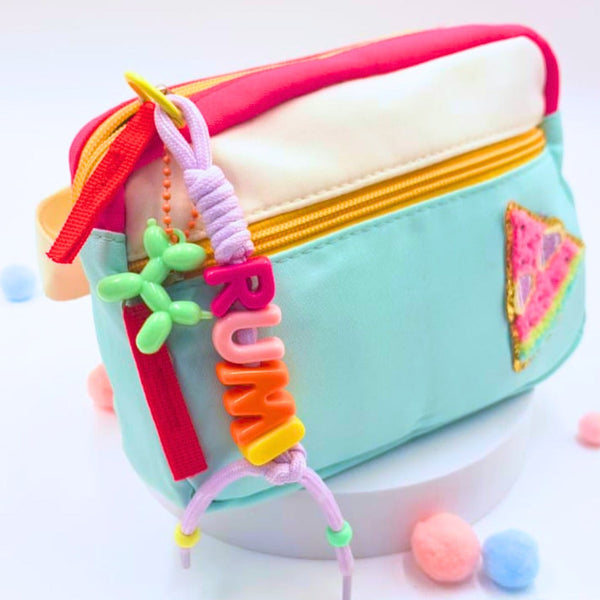
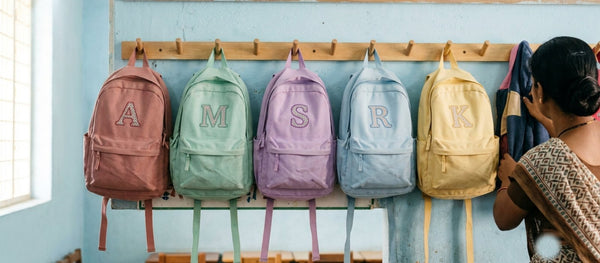
- School bags and sports bags: a personalised bag tag, which clips on and never peels or washes off
One set of each type covers a child's labelling for a full school year.
Why Indian conditions test labels harder
Daily dishwasher cycles
Many Indian households run tiffins through a full dishwasher cycle every evening. Standard labels cannot survive this, so use only dishwasher-rated waterproof labels on food containers.
Monsoon humidity
From June to September, school bags and their contents sit in constant humidity. Labels with water-soluble adhesive fail. Quality iron-on and waterproof stick-on labels are unaffected.
Heavy washing
Uniforms here are washed often and hard. A cheap iron-on label not rated for repeated washing lifts at the edges within three to four weeks. A quality one, fully bonded, does not.
Long school years
Indian schools run from late February or March to late October or November, with short breaks. Labels need to last nine months of continuous use.
Application tip For stick-ons, clean and fully dry the surface, press from the centre to the edges, and wait 24 hours before the first wash. For iron-ons, use butter paper, firm pressure for the full 30 seconds, and flat fabric away from seams.
The Zootii approach: both types, one order
Zootii's name label range includes iron-on labels for uniforms and clothing, and waterproof name labels for bottles, tiffins and stationery, all personalised with your child's name before shipping.
Free shipping above Rs 399. Labelling for more than one child or a school group? Message us on WhatsApp at +91 87796 54469 for bulk pricing.
- Bottles, tiffins and anything that gets washed: waterproof name labels
- Books, notebooks and stationery: personalised name stickers
- A subtle look on glossy surfaces: transparent labels
- Uniforms: clothes labels for school uniforms
 58% off
 58% off
 35% off
Read next
Frequently asked questions
Can I use iron-on labels on my child's water bottle?
No. Iron-on labels need fabric to bond to and will not stick to plastic or metal. Use a waterproof stick-on on bottles and tiffins.
Can I use stick on name labels on school uniforms?
Only briefly. On fabric they peel off within one or two wash cycles. Use iron-on labels on all clothing.
How do I apply a waterproof label so it does not peel?
Clean the surface, dry it completely, press the label down firmly from centre to edges, and wait 24 hours before the first wash so the adhesive sets.
Are iron on labels for clothes safe for children's skin?
Yes. The label is applied before the child wears the item. Once the adhesive cools, it is a smooth, flat surface with no exposed chemicals.
Do iron-on labels come off in the wash?
Not when they are applied properly. Press firmly under butter paper for about 30 seconds and wait a day before the first wash. Most peeling comes from too little heat or pressure.
How do I iron on name labels?
Place the label on a flat spot inside the garment, cover it with butter paper, and press firmly with a household iron for about 30 seconds without sliding. Let it cool and check the edges.
Can you iron on labels to polyester?
Poly-cotton uniform blends usually take them if the garment care tag allows ironing. Do not use iron-on labels on nylon, silk, rayon, swimwear or raincoats.
How long do iron-on labels last?
Applied properly, through a school year of normal home washing with everyday detergent. Very hot washes and bleach shorten their life. Re-press any lifting corner before the next wash.
What if a label needs to come off?
Waterproof stick-ons on hard surfaces can usually be removed with a little warm water and gentle peeling. Iron-on labels are designed to be permanent.

Join the conversation