

Why Do Kids Lose Things at School? 8 Simple Ways to Help
Lost bottles, missing lunch boxes, swapped bags. 8 simple ways to help kids keep track of school things with name labels, bag tags and easy routines.
"My child came home without their water bottle again." "The lunch box is missing." "They picked up someone else's school bag by mistake."
If this sounds familiar, you are not alone. Why do kids lose things at school so often? Mostly because they carry a lot of things, and many children have similar belongings, so keeping track of all of it is not easy.
The answer is not to keep reminding your child every few minutes. Make their belongings easier to identify and give them a simple routine they can follow on their own.
The short answer Combine easy identification with simple routines. Put your child's name on the things they use most, make the school bag easy to recognise with a personalised bag tag, give every item a fixed place and teach a quick check before leaving school.
Why do kids lose things at school? Start with what goes missing most
You don't need to label every item your child owns. Think about the last few things they lost or mixed up. Was it their:
- Water bottle
- Lunch box
- Pencil box
- Sweater
- Books
- Handkerchief
Start with those items first. Once you know what is usually misplaced, you can make those things easier to identify.
8 ways to help kids keep track of their things
1. Put their name on everyday school items
A child's name should be easy to spot on the things they take to school every day.
Name labels for kids are useful for water bottles, lunch boxes, books, pencil boxes and school clothes.
Visibility matters most. A tiny name hidden underneath an item is not much help when several children have similar belongings, so choose a label that can be seen easily when someone picks the item up.
2. Make the school bag easy to recognise
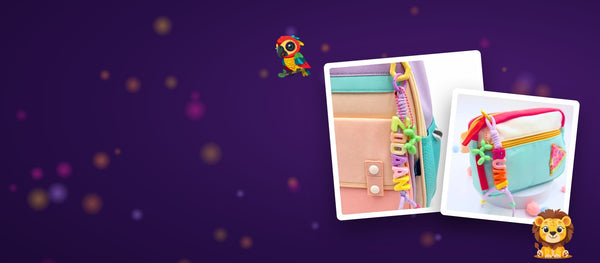
School bags get mixed up easily when many children have similar ones. A personalised bag tag gives your child's bag a clear identity.
Pick a design your child likes and add their name so they can recognise it quickly. This helps younger children most, as they may not always remember exactly what their bag looks like.

3. Give every item a fixed place
One simple habit makes a big difference: everything should have a place. Teach your child where each item goes inside the bag.
| Item | Place in the bag |
|---|---|
| Water bottle | Side pocket |
| Pencil box | Front pocket |
| Books | Main compartment |
| Small items | Zip pocket |
When everything has a regular place, your child quickly notices when something is missing.
4. Teach the "before you leave" check
Instead of "don't forget anything", give your child a fixed checklist before leaving the classroom:
- Look at your desk.
- Look under your desk.
- Check your chair.
- Check your bag.
- Check your lunch box and water bottle.
It takes less than a minute and is much easier to remember than a long reminder.
5. Create a same-day routine at home
The routine continues after school. When your child comes home, teach them to empty the lunch box, keep the water bottle away, put the school bag in its place and check tomorrow's books.
Doing this every day shows children that looking after their things is part of the routine. It also means you notice a missing item before the next school morning.
6. Make it their responsibility
If your child says "I lost my pencil box", it is easy to start looking for it yourself. Instead, ask:
- "Where did you use it last?"
- "Did you check your classroom?"
- "Did you look in your bag?"
This encourages your child to think about their belongings and slowly become responsible for finding them. The goal is not to blame them. It is to teach them how to keep track.
7. Use one simple identification system
Make all important belongings easy to recognise:
- A personalised bag tag for the school bag.
- Waterproof name labels for bottles, tiffins and smaller items.
- Clothes stickers or name labels for sweaters, jackets and other clothing that gets mixed up.
When your child knows their name is on their important things, they can quickly check whether something belongs to them.
8. Build a 30-second habit
If you start just one habit today, make it this one before leaving school: Stop, Look, Check, Go.
- Stop before leaving the classroom.
- Look around the desk and chair.
- Check the bag, water bottle, lunch box and other belongings.
- Go only after everything is with them.
Done every day, checking turns into a natural habit.
What should you label first?
If you are starting from scratch, don't try to do everything at once. Start with the items your child carries every day, in this order:
- School bag
- Water bottle
- Lunch box
- Pencil box
- Books
- School clothes
- Sweater or jacket
- Handkerchief
Once these are covered, add labels to other items your child regularly takes to school.
Label where it shows Stick the label where it is visible when someone picks the item up, not hidden underneath.
How to stop a child losing things: the short version
Kids losing things at school is common, but it doesn't have to happen every day.
The best approach is to combine easy identification with simple routines.
These small changes make school mornings easier for parents and help children become more responsible for their own things.
 58% off
 35% off
 58% off
See all transparent name labels, or read our complete guide to labelling your child's school essentials.
Read next
Frequently asked questions
Why do kids lose so many things at school?
They carry a lot of things every day, and many children have similar bags, bottles and lunch boxes, so items get misplaced or mixed up easily.
How do I stop my child losing things?
Make belongings easy to identify with name labels and a bag tag, give every item a fixed place in the bag, and teach a quick check before leaving: Stop, Look, Check, Go.
Where should name labels for kids go?
Somewhere visible when the item is picked up. Start with the school bag, water bottle, lunch box, pencil box, books, school clothes, sweater and handkerchief.

Join the conversation