

Bhai Dooj 2026: History, Significance and Legends, Explained for Kids
What Bhai Dooj is, where it comes from and how to explain it to a child: the legends of Yama and Yamuna and of Krishna and Subhadra, Bhau Beej to Bhai Tika, the 2026 tika time, and gifts by age.
Bhai Dooj 2026 date Bhai Dooj 2026 is on Wednesday 11 November 2026. The tilak muhurat (aparahna time) is 1:10 PM to 3:20 PM in New Delhi, 1:30 PM to 3:46 PM in Mumbai and 12:27 PM to 2:41 PM in Kolkata. The Dwitiya tithi runs from 2:00 PM on Tuesday 10 November to 3:53 PM on Wednesday 11 November. Source: Drik Panchang, checked on 4 November 2026.
Every year it is the same small scene. The little one sits on the chowki, eyes squeezed shut, chin up, waiting. Didi's finger is a bit too full of roli. The tilak comes out wobbly, half of it on his nose, and everyone laughs. Then she pops the first laddoo into his mouth before he can say anything.
That is Bhai Dooj: the last bright day of Diwali. Below you will find the 2026 date and tilak time for your city, the story behind the day, the rituals step by step, and how to explain all of it to a child.
Bhai Dooj 2026 date and tilak muhurat
In the English calendar, Bhai Dooj 2026 falls on Wednesday 11 November. It is the second day (Dwitiya) of the bright half of Kartik, two days after Diwali.

| City | Tilak muhurat on Wed 11 Nov 2026 | Duration |
|---|---|---|
| New Delhi | 1:10 PM to 3:20 PM | 2 hours 10 minutes |
| Mumbai (Bhau Beej) | 1:30 PM to 3:46 PM | 2 hours 16 minutes |
| Kolkata (Bhai Phonta) | 12:27 PM to 2:41 PM | 2 hours 14 minutes |
| Dwitiya tithi (all cities) | 2:00 PM on Tue 10 Nov to 3:53 PM on Wed 11 Nov | |
Source: Drik Panchang, Bhai Dooj 2026 date and tika time, with the city set to New Delhi, Mumbai and Kolkata. Other cities differ by a few minutes, so check your local panchang if the exact time matters to your family.
Real life note The aparahna window is the traditional time. Many families simply do the tilak when everyone is home. If that is after school or after lunch, the day still counts.
Is Bhai Dooj on 10 or 11 November 2026?
11 November. The Dwitiya tithi only begins at 2:00 PM on Tuesday 10 November, and that day is Govardhan Puja. The panchang places Bhai Dooj, also called Yama Dwitiya, on Wednesday 11 November.
Is Bhai Dooj in October 2026?
No. Diwali comes late this year, so the whole festival week falls in November. Here is the full week:
| Day | Festival, 2026 |
|---|---|
| Friday 6 November | Dhanteras |
| Sunday 8 November | Naraka Chaturdashi and Diwali (Lakshmi Puja), also Kali Puja |
| Monday 9 November | Amavasya (Diwali Snan) |
| Tuesday 10 November | Govardhan Puja, Annakut, Gujarati New Year |
| Wednesday 11 November | Bhai Dooj, Bhau Beej, Yama Dwitiya, Chitragupta Puja |
Source: Drik Panchang Diwali calendar 2026.
Bhau Beej, Bhai Phonta and Bhai Tika 2026 dates
- Bhau Beej 2026 (Maharashtra, Goa): Wednesday 11 November. Tilak time in Mumbai is 1:30 PM to 3:46 PM.
- Bhai Phonta 2026 (West Bengal): Drik Panchang's Kolkata calendar also lists Wednesday 11 November, with the window at 12:27 PM to 2:41 PM. If your family follows a Bengali panjika, check it for the phonta time.
- Bhai Tika 2026 (Nepal): Bhai Tika is the last day of Tihar. Nepal fixes the tika time (sait) in its own national calendar, so check the official Nepali patro for the exact time.
What is Bhai Dooj, and why is it celebrated?
What the name means
"Bhai" means brother. "Dooj" means the second day. It falls on the second day of the bright half of Kartik, right after the new moon of Diwali, which is why it is also called Bhai Dwitiya or Yama Dwitiya. In Hindi it is भाई दूज, in Marathi भाऊबीज and in Bengali ভাইফোঁটা.
Why it is celebrated
To honour the bond between brothers and sisters. The sister puts a tilak on her brother's forehead, feeds him and prays for his long, happy life. The brother promises to stand by her and gives her a gift. Drik Panchang notes the belief that a brother who receives a tilak from his sister on this day is freed from the fear of Yama, the lord of death, and blessed with a long life.
What it means for a child
For children, the meaning is simple and lovely. A sister says, "I want you safe and happy." A brother says, "I will look out for you." Today, sisters give gifts too, and cousins, neighbours and friends who feel like siblings often join in.

How it differs from Raksha Bandhan
On Rakhi, in Shravan (usually August), the sister ties a thread on her brother's wrist. On Bhai Dooj, in Kartik at the end of Diwali, the centre of the day is the tilak and a meal at the sister's home.
The Bhai Dooj story (katha): two legends for kids
These are stories from tradition, told for centuries. They are legends, not recorded history, and that is how we suggest telling them to children.

Yama and Yamuna
Yamuna, the river goddess, had a brother called Yama, the lord of death. She kept inviting him home for a meal. He kept saying, "Tomorrow, I am busy."
One day, on the second day after the new moon of Kartik, he finally came. Yamuna bathed him, dressed him in fine clothes and fed him the best food she could cook. Yama was so happy that he asked her to make a wish.
She wished that he would come every year on this day, and that any brother who eats at his sister's home on this day need never fear him. Yama agreed.
In the Yama Dwitiya katha, Yama even set free everyone caught in his noose that day, and kings were told to let prisoners go home to eat with their sisters (Drik Panchang, Yama Dwitiya katha). This is also why many families bathe in the Yamuna, or any river, on Bhai Dooj morning.
How to tell a 5-year-old "Yamuna loved her brother so much that she cooked him a feast. He was so happy that he promised to keep every brother safe who visits his sister today."
Krishna and Subhadra
Another story says that after Krishna defeated the demon Narakasura (the victory remembered on Naraka Chaturdashi, one of the days of Diwali), he went to visit his sister Subhadra. She welcomed him with sweets and flowers and put a tilak on his forehead. Some families believe this is where the tilak custom began (Wikipedia: Bhai Dooj).
How to tell a 5-year-old "After a big, brave fight, Krishna went to see his sister. She was so glad he was safe that she gave him sweets and a tilak."
If your child likes Krishna stories, our Shlokas Made Easy: Krishna's Story (₹199) tells his life in simple illustrated shlokas with an English translation. It is a good one to read the night before.
Chitragupta Puja on the same day
The panchang also lists Chitragupta Puja on 11 November. Many Kayastha families worship Chitragupta, the keeper of records in Yama's court, on Yama Dwitiya, with pens and account books placed before him. If your family does this, let your child add a favourite pencil.
Bhai Dooj rituals, step by step
Customs vary from home to home. This is the common shape of the day, with a note on how small children can take part.

- Morning: bath and a vow. Many sisters bathe early and some keep a fast until the tilak is done. Children do not need to fast.
- Get the thali ready together. Roli or kumkum, a few grains of rice (akshat), a small diya, sweets, and a coconut or a dry fruit in some homes. A 3-year-old can place the sweets.
- Seat the brother on a low stool or chowki, facing the sister.
- The tilak. Roli, then a few grains of rice on top. Some families also tie a sacred thread on the wrist after the tilak. Older children can do it themselves. For toddlers, guide their finger.
- Aarti. An adult holds the diya, and the child holds the thali edge.
- The first sweet, then the meal. This is the heart of the Yama and Yamuna story, so let the sister feed the first bite. The meal at the sister's home is the oldest part of the day.
- Gifts both ways, and a blessing. Then let them run off and play.
A wobbly tilak is the best kind.
Safety first During the aarti, keep dupattas, sleeves and long hair away from the flame. Let an adult hold the diya.
No brother or sister at home?
A cousin, a neighbour's child or a close friend is welcome. In Maharashtra, some girls without a brother do aarti to the moon, one reason the moon is called Chanda Mama.
Siblings in another city
Do the tilak on a video call at the muhurat time, and post the gift ahead so it arrives before the day.
How to explain Bhai Dooj to kids
Start with one line: "Today we say thank you for having a brother or sister, and we promise to look after each other." Then add a little more as they grow.
| Age | What to say | What they can do |
|---|---|---|
| 3 to 5 | "Didi puts a red dot on your head to say she loves you. You give her a hug and a gift." | Place the sweets on the thali, pick a gift from two choices |
| 6 to 8 | Tell the Yama and Yamuna story: a sister cooked a feast, her brother promised to keep all brothers safe. | Do the tilak themselves, draw a card, write one line for their sibling |
| 9 to 12 | Add the regional names and why the tithi decides the date each year. | Help cook one dish for the meal, look up the muhurat for your city |
Need words for the card? Our Bhai Dooj wishes for brother and sister has 30 short lines that kids can copy in their own handwriting.
One festival, many names
Bhai Dooj is the same idea with a different name, and a slightly different custom, in each region.

| Name | Where | One custom worth telling kids about |
|---|---|---|
| Bhai Dooj / Bhaiya Dooj | North India, Uttar Pradesh, Bihar (Bhardutiya among Maithils) | Tilak, aarti and a meal at the sister's home |
| Bhau Beej / Bhai Beej | Maharashtra, Goa, Gujarat, Konkani-speaking Karnataka | A girl without a brother may do aarti to the moon |
| Bhai Phonta / Bhai Phota | West Bengal, Tripura, Bangladesh | The sister places a "phonta", a dot, on her brother's forehead, followed by a big feast |
| Bhai Tika | Nepal, the last day of Tihar | A seven-colour tika and a garland of makhamali flowers; in some communities brothers and sisters give tika to each other |
| Yama Dwitiya | South India | Named after the Yama and Yamuna legend |
| Bhagini Hastha Bhojanamu | Andhra Pradesh, Telangana | The name means "a meal from a sister's hand" |
Sources: Wikipedia: Bhai Dooj and the Nepal Tourism Board on Tihar.
Bhai Dooj history: how the day changed
The meal came first
In the Yama Dwitiya katha, the heart of the day is the brother eating at his sister's home. The tilak and aarti are part of how she welcomes him.
The thali grew around it
Families added a decorated puja thali with roli, rice, a diya and sweets, plus the aarti and the exchange of gifts that Drik Panchang describes as today's practice.
1905, Bengal
Historians link Rabindranath Tagore's rakhi-bandhan ceremonies against the Partition of Bengal, where Hindus and Muslims tied threads on each other's wrists, to this brother-sister ritual. The scholar Rachel Fell McDermott of Columbia University writes about it (cited on Wikipedia). A family festival became a symbol of brotherhood between communities.
Today
Tilak on a video call for siblings in other cities. Sisters giving gifts as well as receiving them. Cousins and friends included.
Bhai Dooj gift ideas for kids
The tradition is for the brother to give. In most homes now, both siblings give something. For a full list by age, see our Bhai Dooj gift for sister and brother guide, which picks gifts for kids aged 3 to 13.
The gift that lasts is the one they use after the festival: on the school bag, in the hair, in the lunch box. Prices below were checked on our store on 4 November 2026. Personalised items take a name of up to 8 characters.

Under ₹300
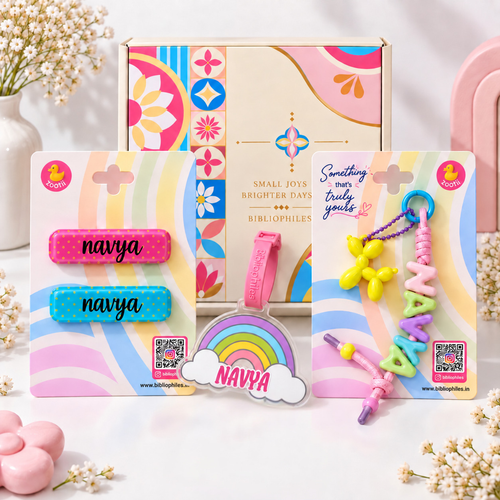
- Name hair clips, stripes pastel, ₹299 for 2: for a little sister, 2 and up.
- Cricket name bag tag, ₹289: for a brother who lives for cricket.
- Shlokas Made Easy: Krishna's Story, ₹199: to read together the night before.
₹300 to ₹500
- Dinosaur shape bag tag, ₹339: for a dino-mad brother, 3 to 7.
- Unicorn shape bag tag, ₹339: for a sister who draws unicorns on everything.
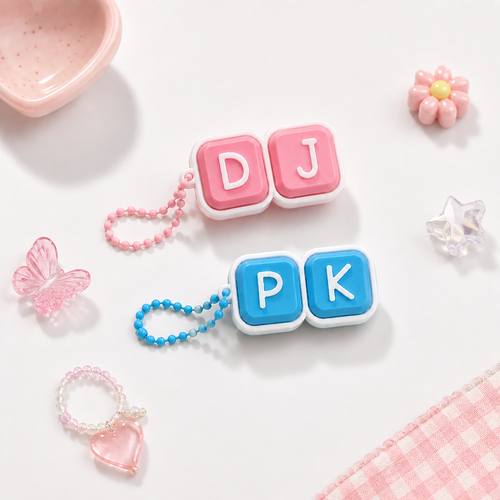
- Clicker bag charm with initials, ₹396: for an older brother or sister, 9 to 13.
- Jelly name bag charm, ₹439: for a sister, 6 to 13.
- Name pen-pencils, pack of 2, ₹499: for a school-going sibling who loses pencils.
₹500 to ₹1,000
- Name muslin hankies, set of 3, ₹523: for a brother, for the school pocket.
- Rainbow Diva hamper, ₹799: for a sister: clips, bag tag and charm in one box.
- Little Miss Stylish hamper, ₹799: for a sister who changes clips twice a day.
- Race car name water bottle, ₹999: for a brother who forgets his bottle at school.
- Psy holographic tote, ₹999: for a sister, 9 to 12.
₹1,000 and up
- Jurassic bento lunch box, ₹1,299: for a brother who trades tiffin at recess.
- Glam Girl hamper, ₹1,499: the big gift for a sister, 5 to 12.
- Bento and bottle combo, ₹2,199: lunch box and matching bottle with the name on both.


 38% off
A gift the little one can give
A toddler cannot shop, but they can choose. Show them two bag tags and let them pick one for their sibling. Add a set of Diwali gift tags (12 for ₹329) and let them stick on the name.
Ordering this week? Read this first
Every personalised gift is made after you order and ships in 8 to 12 working days, so an order placed in the week of Bhai Dooj will usually arrive after 11 November. Message us on WhatsApp with your pincode before you order and we will tell you honestly whether yours can make it. If not, a handmade "your gift is on its way" card on the day, with the real gift a few days later, works just as well for kids. Orders over ₹399 ship free.
Building a bigger hamper for the whole family? See our personalised Diwali hampers for kids guide, the gift boxes, or browse all gifts.
Bhai Dooj is Wednesday 11 November. Check delivery before you order.
Personalised gifts are made to order, so time is tight. Message us on WhatsApp with your pincode and we will tell you whether yours can be expedited.
Frequently asked questions
When is Bhai Dooj in 2026?
Wednesday 11 November 2026. The tilak muhurat is 1:10 PM to 3:20 PM in New Delhi, according to Drik Panchang.
Is Bhai Dooj on 10 or 11 November 2026?
11 November. The Dwitiya tithi begins at 2:00 PM on 10 November, which is Govardhan Puja, and ends at 3:53 PM on 11 November. Bhai Dooj is observed on Wednesday 11 November.
What is the Bhai Dooj 2026 tilak muhurat?
The aparahna tika time is 1:10 PM to 3:20 PM in New Delhi, 1:30 PM to 3:46 PM in Mumbai and 12:27 PM to 2:41 PM in Kolkata, per Drik Panchang.
Is Bhai Dooj in October 2026?
No. Diwali (Lakshmi Puja) is on Sunday 8 November 2026, Govardhan Puja on Tuesday 10 November and Bhai Dooj on Wednesday 11 November.
When is Bhau Beej and Bhai Phonta in 2026?
Both fall on Wednesday 11 November 2026 according to Drik Panchang. Families who follow a Bengali panjika or the Nepali calendar for Bhai Tika should check those for the exact time.
Why is Bhai Dooj celebrated?
To honour the bond between brothers and sisters. The best-known legend is of Yamuna feeding her brother Yama, who promised that brothers who visit their sisters on this day need not fear him.
What is the story of Bhai Dooj in short?
Yamuna kept inviting her brother Yama for a meal. When he finally came, on the second day after the Kartik new moon, she fed him a feast and put a tilak on him. He blessed every brother who visits his sister on this day.
What is the difference between Raksha Bandhan and Bhai Dooj?
Raksha Bandhan is in Shravan (usually August), and the sister ties a rakhi. Bhai Dooj is two days after Diwali, and the sister applies a tilak and feeds her brother a meal.
What is Bhai Dooj called in other states?
Bhau Beej in Maharashtra and Goa, Bhai Phonta in Bengal, Bhai Tika in Nepal, Yama Dwitiya in South India and Bhagini Hastha Bhojanamu in Andhra Pradesh and Telangana.
What if the brother lives in another city?
Do the tilak on a video call at the muhurat time and send the gift ahead. Some sisters also do the aarti for the moon and pray for their brother.
What can I gift a little sister or brother on Bhai Dooj?
For under-5s: name hair clips (₹299) or a dinosaur bag tag (₹339). For 5 to 8: the Rainbow Diva Hamper (₹799) or a clicker bag charm (₹396).
Tell us in the comments
What is your family's Bhai Dooj tradition: tilak first or sweets first? And what do you call it at home: Bhai Dooj, Bhau Beej, Bhai Phonta or Bhai Tika?
Share the funniest thing your little one did during the tilak. We will feature a few, with permission. And send this to a sibling you have not called in a while.
Keep reading
-
 Annual dayAnnual-Day Nerves: Star Parents in the Audience, and How to Help Your Child on Stage
-
 Celebrity parentsScreen Time at Home: The Rules Akshay, Kareena, Shilpa and Twinkle Say They Follow
-
 Back to schoolRoyal First Days: How Prince George, Charlotte and Louis Started School, and What Every Parent Can Borrow
Join the conversation